

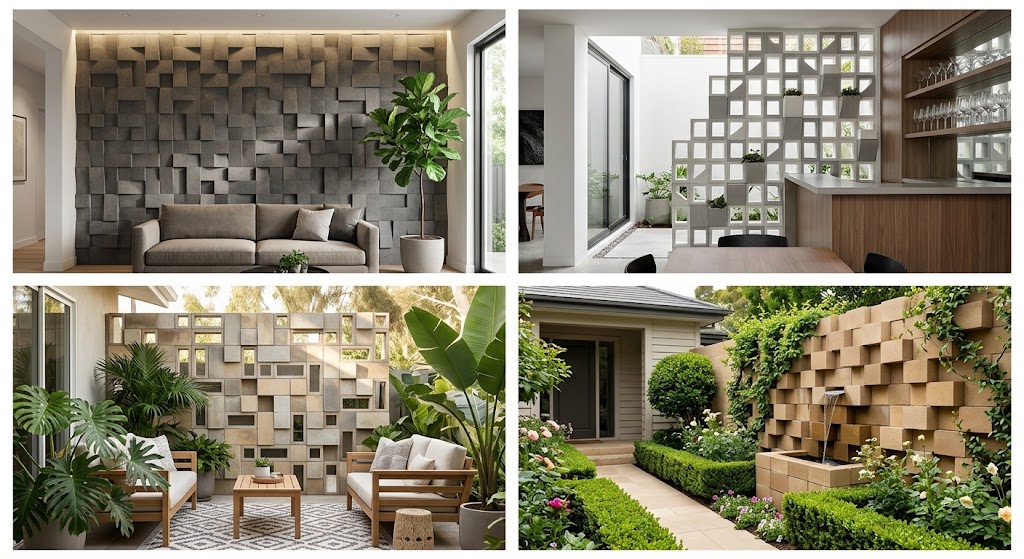
A wall does not always have to be plain.
With the right pattern and placement, a wall can become one of the most distinctive features of a home — adding texture, visual rhythm and architectural character without relying on complicated decorative finishes.
One option to consider is a breeze block feature wall.
Breeze blocks are patterned cement blocks with openings that allow the block itself to become part of the design. Depending on the selected pattern and application, they can be used for interior partitions, garden walls, entrances, patios, boundary features and other decorative spaces.
If you are looking for inspiration, here are 10 breeze block feature wall ideas for indoor and outdoor spaces.
1. Living Room Feature Wall
A living room feature wall is one of the most visible opportunities to introduce a distinctive design element.
Instead of using paint, wallpaper or conventional decorative panels, a breeze block wall can create texture and pattern through the arrangement of individual blocks.
Design direction
For a contemporary interior, consider geometric designs such as:
- Cube
- Matrix
- Diamond
- Square
For a more decorative look, consider patterns such as Flower, Leaf or Maze.
A breeze block feature does not necessarily need to cover the entire wall. A smaller section can sometimes create a more focused visual statement.
2. Dining Area Partition Wall
Open-plan living spaces are popular because they create a sense of connection between different areas.
However, you may still want to visually distinguish the dining area from the living room.
A breeze block partition can create a transition between the two spaces without making the separation feel completely solid.
Design idea
Use a repeated geometric pattern to create a consistent visual rhythm.
For example, Cube, Matrix or Diamond can complement a modern dining space, while Leaf or Flower can create a softer decorative direction.
Before installation, consider the viewing angles from both sides of the partition so that the pattern works from the entire space.
3. Entrance or Foyer Feature
The entrance creates the first impression of a home.
A breeze block feature can be incorporated around the foyer, entrance walkway or area near the main door to introduce pattern before visitors enter the main living spaces.
Possible applications include:
- Partial entrance screens
- Decorative foyer walls
- Porch partitions
- Feature sections beside the entrance
- Decorative backgrounds
Design direction
For a minimalist home, geometric patterns can provide a clean architectural appearance.
For homes surrounded by greenery, nature-inspired designs such as Leaf, Flower or Bamboo can create a visual connection between the entrance and landscape.
4. Patio Feature Wall
A covered patio can become an extension of the home's living space.
Instead of leaving the surrounding walls completely plain, a breeze block feature can introduce a decorative focal point to the outdoor area.
Consider using breeze blocks behind:
- Outdoor seating
- Dining areas
- Bar counters
- Decorative plants
- Entertainment areas
Design tip
Look at the materials already present in the patio.
Breeze blocks can be paired visually with timber, stone, concrete-look surfaces, plants and neutral finishes.
The goal is to make the pattern feel like part of the overall outdoor design rather than an isolated decoration.
5. Garden Feature Wall
A garden provides an opportunity to use patterns and textures that complement nature.
A breeze block wall can be incorporated into a garden as a decorative backdrop, partial screen or architectural feature.
Nature-inspired patterns
Consider designs such as:
Leaf · Flower · Bamboo · Floral · Mountain3
These patterns can work particularly well when combined with plants and natural landscaping elements.
You can also use a geometric pattern if your garden follows a more structured, contemporary design.
Design tip
Don't think only about the wall itself.
Consider how the breeze block pattern will look behind plants, against the sky and alongside surrounding landscape materials.
The changing light and shadows can also influence how the pattern appears throughout the day.
6. Staircase or Transitional Space
Breeze blocks can also be considered for selected transitional areas within a home.
For example, a patterned screen can visually separate a staircase from a living area while maintaining a sense of connection between the spaces.
This approach can be useful when a completely solid wall would make the area feel too enclosed.
Design direction
A simpler geometric pattern such as Cube, Matrix or Square can work well where the surrounding architecture already has strong lines.
For a more decorative interior, consider patterns such as Maze or Window designs.
The exact application should be reviewed with your designer or contractor based on the space and installation requirements.
7. Outdoor Dining or Entertainment Area
Outdoor entertaining areas often benefit from some degree of visual definition.
A breeze block wall can create a decorative background for an outdoor dining or seating area while maintaining a more open visual character.
For example, the wall could be used behind:
- Dining tables
- Outdoor kitchens
- Seating areas
- Decorative lighting
- Plants and landscaping
Design idea
A grey breeze block can complement neutral outdoor materials and a contemporary architectural palette.
White breeze blocks can create a cleaner and brighter visual direction.
VIETTILES offers selected designs in both white and grey, although availability varies by pattern.
Explore White & Grey Breeze Block Designs
8. Home Office or Study Partition
A home office does not always need a completely enclosed room.
If you want to visually separate a workspace from another part of the home, a breeze block partition can be considered as a decorative divider.
It can help establish a clear visual boundary while maintaining a connection between the two spaces.
Design direction
Choose a pattern according to the atmosphere you want.
Cube, Matrix and Square can create a more structured and minimalist appearance.
A more decorative design can become a stronger feature within the room.
Consider the position of the screen carefully, particularly if natural light or visibility between spaces is important.
9. Poolside or Garden Screening
Outdoor recreational areas can sometimes benefit from decorative screening.
A breeze block feature can be incorporated into a selected section of a poolside or garden area to create a visual boundary without relying entirely on a plain solid wall.
For example, it could be used to:
- Define a poolside zone
- Separate seating from landscaping
- Create a garden screen
- Form a decorative background
- Visually divide different outdoor areas
Design tip
For outdoor applications, consider the location, exposure, wall dimensions and installation requirements before choosing the design.
The pattern should complement the surrounding landscape while providing the level of visual separation required.
10. Make a Small Wall the Main Feature
You don't always need a large wall to make an impact.
Sometimes, a small, carefully positioned breeze block section can become the focal point of an otherwise simple space.
Consider using a breeze block feature:
- Beside the entrance
- Behind a planter
- At the end of a corridor
- Beside a staircase
- Around a courtyard
- As a decorative screen
This approach is particularly useful if you prefer a minimalist design.
Instead of covering every available surface, select one area where the pattern can stand out.
How to Choose the Right Breeze Block Pattern for a Feature Wall
Once you decide where to create your feature wall, the next question is:
Which breeze block design should you use?
Start with the visual direction of your space.
Modern & Minimalist
Consider:
- Cube
- Matrix
- Square
- Diamond
These geometric designs can complement clean architectural lines.
Nature-Inspired
Consider:
- Leaf
- Flower
- Bamboo
- Floral
These can work particularly well alongside plants, gardens and natural materials.
Creative & Artistic
Consider:
- Maze
- Rubik
- Smile
- Space
- Lamp
These patterns can create a stronger decorative statement.
Classic
Consider:
- Roman
- Diamond
These can suit projects looking for a more traditional architectural character.
White or Grey Breeze Blocks for Your Feature Wall?
Colour can influence how the finished feature wall works with the rest of your space.
White Breeze Blocks
White can complement:
- Minimalist interiors
- Bright spaces
- Contemporary homes
- Light-coloured walls
- Clean architectural palettes
Grey Breeze Blocks
Grey can complement:
- Neutral interiors
- Contemporary architecture
- Cement-inspired finishes
- Industrial-style spaces
- Darker material palettes
The best choice depends on the surrounding materials and the overall design direction.
5 Questions to Ask Before Installing a Breeze Block Feature Wall
Before ordering your blocks, consider:
1. What is the purpose?
Is the wall purely decorative, or does it also separate two spaces?
2. How open should the design be?
Think about visibility, airflow and the desired level of visual separation.
3. How large is the wall?
Wall dimensions will influence the number of blocks required and how the pattern is laid out.
4. Which pattern suits the architecture?
The pattern should complement — not compete with — the surrounding design.
5. How will the wall be installed?
Discuss wall support, reinforcement, alignment, mortar joints and other installation requirements with your contractor before construction.
For project-specific structural requirements, consult an appropriately qualified professional.
Turn an Ordinary Wall into a Design Feature
A breeze block feature wall does not have to be complicated.
The most successful applications usually start with a simple question:
What do I want this wall to do?Once you understand the purpose, you can select a suitable level of openness, pattern, colour and location.
Whether you are designing a living room partition, garden feature, entrance screen, patio wall or outdoor space, the right breeze block pattern can become an important part of the overall architectural design.
Explore Breeze Block Designs from VIETTILES
Looking for the right pattern for your feature wall?
VIETTILES offers a collection of handmade cement breeze blocks imported from Vietnam, with a wide range of decorative patterns for residential, commercial and outdoor applications.
Explore nature-inspired, geometric, artistic and classic designs in the available white and grey breeze block collections.
Compare the patterns and find a design that fits your space.
Ready to find your feature wall design?
Explore All Breeze Block Products
Frequently Asked Questions
Can breeze blocks be used as an indoor feature wall?
Yes. Breeze blocks can be considered for selected interior applications such as feature walls, decorative partitions and room dividers, subject to the project's design and installation requirements.
Can I use breeze blocks outdoors?
Yes. VIETTILES states that its breeze blocks are suitable for both indoor and outdoor applications. The appropriate installation method depends on the specific project and location.
Which breeze block is best for a feature wall?
There is no single best design. Choose according to the space, architectural style, desired level of openness and overall visual direction.
Are white or grey breeze blocks better?
Neither is universally better. White and grey create different visual effects, so consider the surrounding wall colour, flooring, landscaping and architectural materials.
Can breeze blocks be used as a room divider?
Yes. They can be used for selected semi-open partitions where you want to visually separate spaces without creating a completely solid wall.
Ready to Create Your Breeze Block Feature Wall?
From a small decorative entrance screen to a large garden feature, breeze blocks can be used in many ways to introduce pattern, texture and visual character into a space.
The key is to select the right combination of application, pattern, colour and layout.
Explore the VIETTILES collection and find the breeze block design that fits your project.